
February's Case of the Month - 2026
“When the Stomach Tells a Different Story: Gastric Lymphoma Instead of the Usual Suspects”
Patient Information
Age: 12y 7m
Gender: Male Neutered
Breed: Cavalier King Charles Spaniel
Species: Canine
History
The patient presented on 8/1/25 for evaluation of vomiting bile and partially digested food over the preceding several days. The owner also reported soft stools, lethargy, and panting. Appetite remained stable throughout this period. At the time of presentation, the patient was receiving Deracoxib, Gabapentin, and Trazodone. Apoquel had been recently initiated but was discontinued by the owner once vomiting began. The patient is currently maintained on a Purina EN Low Fat diet.
In 2024, the patient was evaluated at a specialty facility where abdominal ultrasound identified hepatic and splenic nodules. A splenectomy was performed and liver biopsies were obtained, both of which yielded benign results. The patient has had a continued history of elevated alkaline phosphatase (ALP) levels.
Biochemical abnormalities
CBC: Regenerative anemia HCT= 21.9 %, decreased HGB = 79 g/dL, Monocytosis, Left shift with immature Neutrophils observed.
Chemistry: Severe elevation of ALKP = 1456 u/L
Abdominal Ultrasonographic Findings
Liver: Mildly enlarged with rounded margins. The parenchyma is diffusely hyperechoic with patchy areas of differing echogenicity. There is an illdefined non contour deforming hypoechoic nodule in the left liver measuring approximately 2.6 x 1.3 cm.
Gallbladder: The gallbladder is moderately enlarged and rounded in shape having hyperechoic organized sludge with subtle radiating linear striations along the periphery consistent with an emerging gallbladder mucocele; however does not have the full "cut kiwi" appearance typical of an mature gallbladder mucocele. There is an ill-defined hyperechoic/mineralized structure suspended in the gall bladder sludge causing distal acoustic shadowing measuring approximately 7.3 mm. Mild common bile duct dilation measuring approximately 4.7mm.
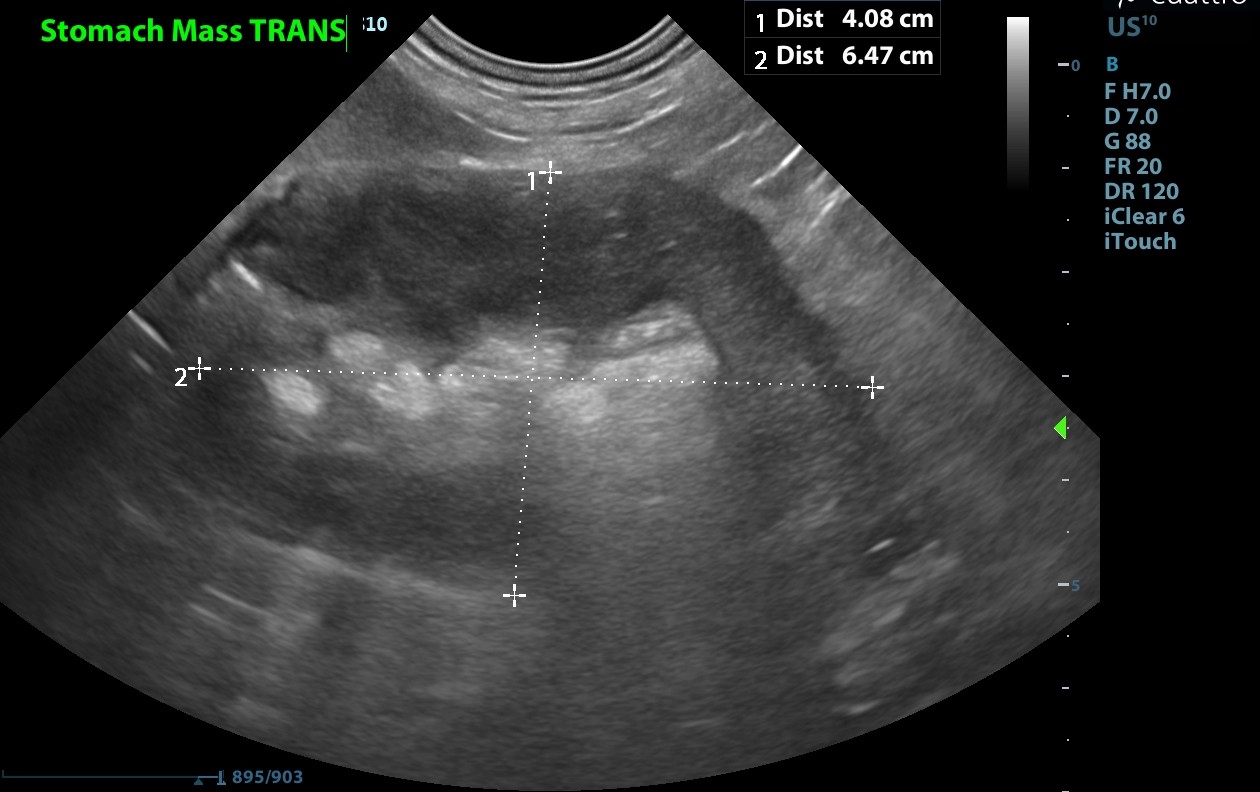
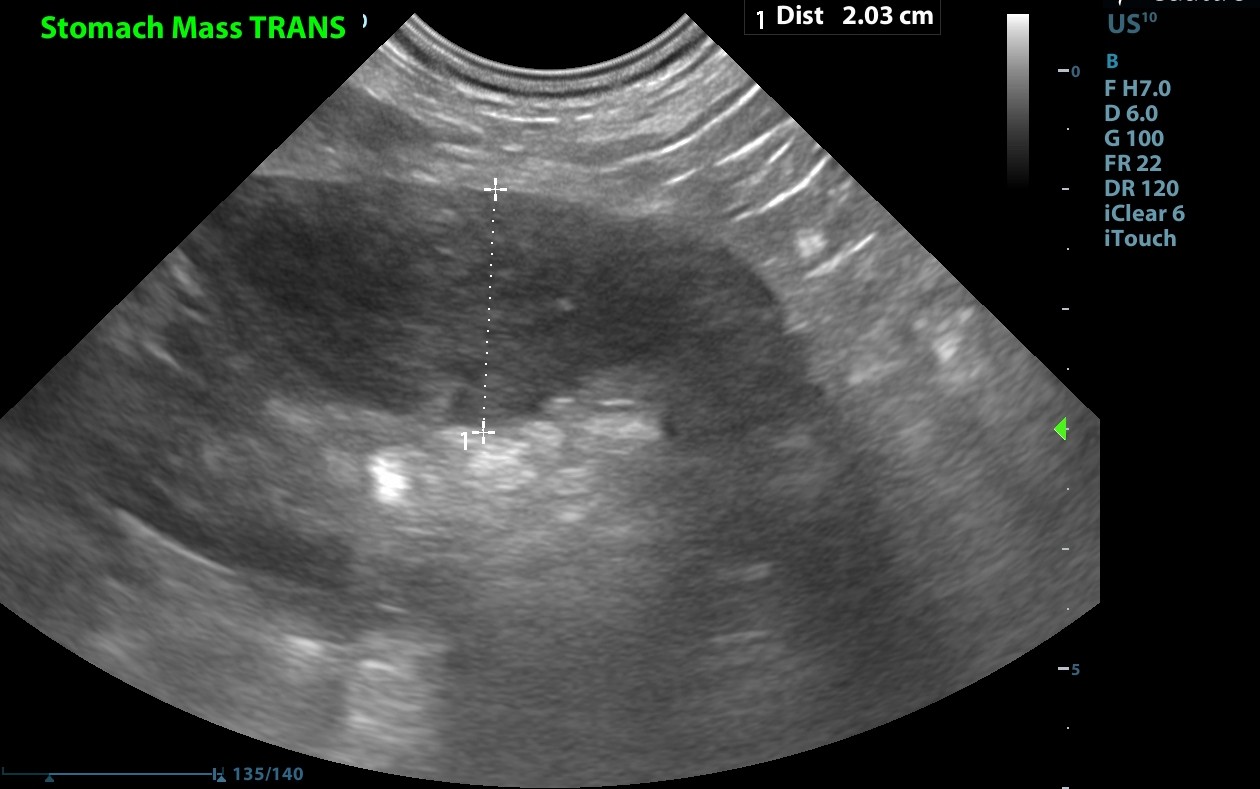
Stomach: The stomach is empty and collapsed with small amount of gas in lumen. There is a partially circumferential, irregularly marginated homogeneous hypoechoic transmural mass of the gastric wall measuring up to 4.1 x 6.5 cm at the largest affected area transverse. The gastric wall measures 3.4 mm in some normal wall areas, but up to 20.3 mm where the mass has affected normal wall layering. The pylorus is free of obstruction.
Lymph Nodes: The medial iliac lymph nodes are moderately enlarged with rounded shape having homogenous hypoechoic echogenicity.
Left: 0.9 cm
Right: 0.7 cm
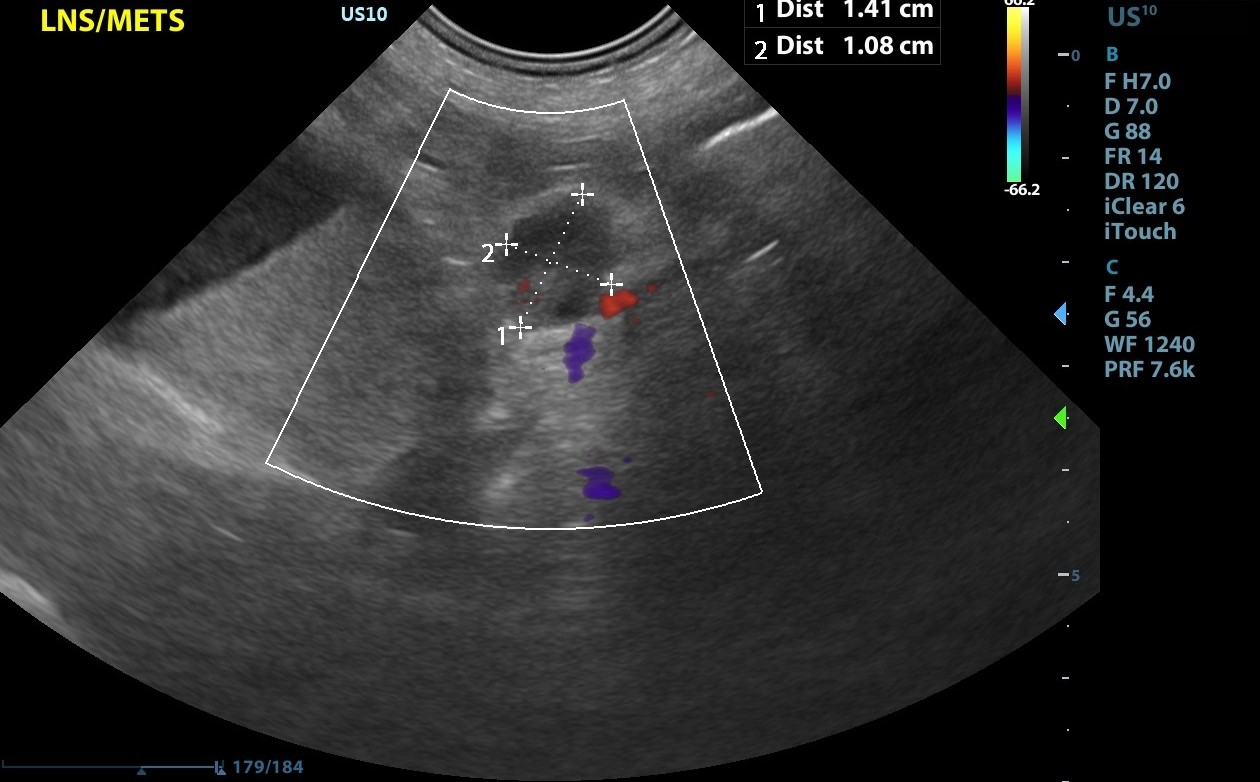
Multiple mesenteric lymph nodes are mildly enlarged (up to 0.6 cm) with rounded shape having homogenous hypoechoic echogenicity.
Serosal Surfaces: There is a scant amount of anechoic free fluid is seen throughout the abdomen.
Mesentery throughout the abdomen is diffusely hyperechoic.
There are several more prominent well defined heterogenous to homogenous nodules (lymph nodes vs metastatic lesions) within the mesentery near the stomach and gall bladder.
Ultrasound Interpretation
Liver - the findings are Mild - DDx:
Steroid hepatopathy / Vacuolar hepatopathy / Glycogen storage disease /
Copper storage disease
Chronic vs. Acute hepatitis or cholangiohepatitis (bacterial vs. sterile vs. toxin)
Diabetes mellitus
Infiltrative neoplasia (lymphosarcoma)
Fungal infection
Hepatotoxin
Liver Nodule - the findings are Mild - DDx: benign nodules of regeneration vs. emerging primary hepatic neoplasia vs. metastatic neoplasia.
Gallbladder - the findings are Moderate - DDx: cholestasis vs cholangitis/cholangiohepatitis vs early emerging mucocele.
Stomach Mass - the findings are Moderate to Severe - DDx:
adenocarcinoma vs. infiltrative neoplasia (lymphosarcoma) vs. leiomyosarcoma vs. leiomyoma vs. benign mucinous hypertrophy or gastric ulcer.
Lymph nodes - the findings are Mild to Moderate - DDx: infiltrative
neoplasia (lymphoma vs. mast cell vs. other) vs. IBD vs. infection vs. reaction vs. metastatic neoplasia.
Mesentery (Hyperechoic) - the findings are Moderate - DDx: peritonitis - inflammation vs. paraneoplastic reaction vs. infectious vs. fibrosis vs. other.
Mesentery (Possible Metastasis) - DDX: metastasis (e.g. carcinomatosis, lymphomatosis vs sarcomatosis) vs peritonitis - inflammation vs. paraneoplastic reaction vs. infectious vs. fibrosis vs. other.
Ascites - this finding is Mild - DDx: transudate vs. hemorrhagic vs. exudate.
Diagnostic Recommendations
- Fine needle biopsyies of the stomach mass were obtained and submitted for cytological evaluation.
- Referral of this patient to a veterinary Oncologist/Surgeon for advanced imaging (i.e. CT scan/Endoscopy) and to discuss possible therapeutic options is highly recommended on a urgent basis.
- Consider 3-view chest radiographs to further evaluate for evidence of metastatic disease, if not already performed.
- Given the scant amount of free fluid, this could represents an inflammatory change, but other etiologies are not excluded.
- The lymphadenopathy and hypoechoic nodules within the mesentery are concerning for likely metastasis.
- The changes to the liver are mild, diffuse and nonspecific. Neoplasia is not highly suspected. Pursue further diagnostics (e.g. biopsy) as clinically appropriate. Consider initiating therapy with Denamarin for 4-6 weeks, then rechecking liver values to assess for trends.
- There is evidence of moderate cholestasis and biliary organization. Consider medically managing by beginning a course of Flagyl & Baytril as well as 2-3 months of Actigall and recheck ultrasound in 2-3 months or sooner if clinically indicated. Monitor liver values, including Tbili and white blood cells, for trends and monitor patient for clinical signs suggestive of common bile duct obstruction which may indicate a need for more aggressive care (i.e. inappetance, vomiting, abdominal guarding, profound lethargy).
- The changes to the kidneys are most consistent with chronic change. Continue monitoring renal parameters and consider urinalysis with urine culture and sensitivity and systemic blood pressure if not recently performed.
- If further diagnostics are not pursued, consider palliative/symptomatic therapy to maintain quality of life.
Additional Testing Results: Fine Needle Biopsy
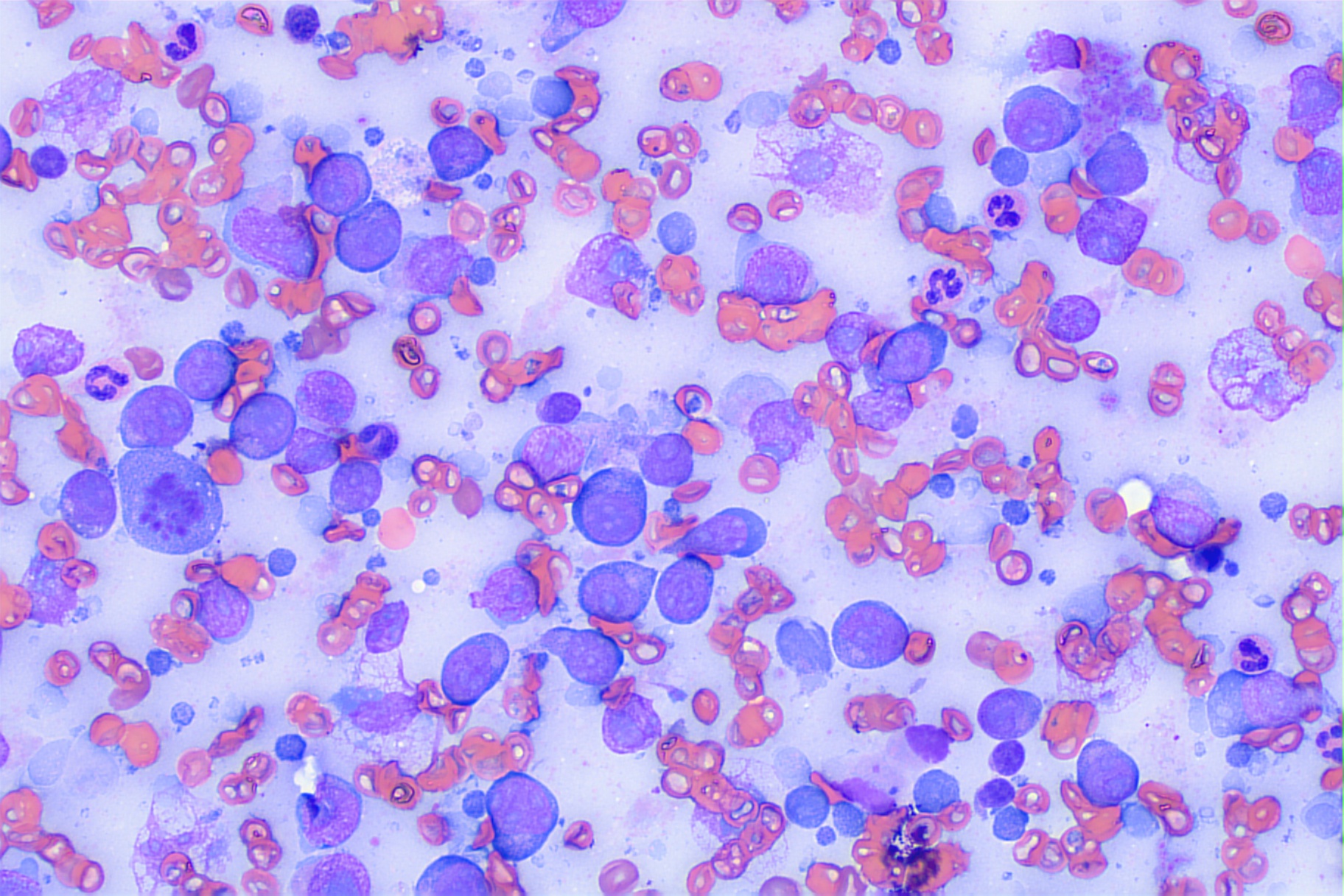
Pathological Findings Diagnosis: Large cell lymphoma
Comments: Cytologic findings are consistent with large cell lymphoma. In the dog, the most common type of lymphoma is diffuse large B-cell lymphoma; however, further diagnostics are often needed to determine cell type (B vs T). Flow cytometry on a fresh sample could be pursued or less optimally these slides could be submitted for PARR analysis. Alternatively, consider biopsy with histopathology +/- immunohistochemistry. Sampling of additional lymph nodes and/or solid tissues/organs could be pursued for further staging information, if warranted. Correlate with physical exam additional diagnostics for interpretation.
Microscopic Description:
The sample is moderately cellular with adequate preservation. Large neoplastic lymphocytes predominate on a basophilic background with few small lymphocytes, non-degenerate neutrophils, and macrophages. The large lymphocytes are round with distinct cellular borders, and a small amount of medium basophilic cytoplasm, with a variably perinuclear clearing. The nucleus is round to oval, with stippled immature chromatin, measuring 2-3 times a size of an erythrocyte, with 1-2 large pale nucleoli. There are mitotic figures seen throughout this population. No infectious agents are identified.
Patient Outcome
Unfortunately when patient presented for urgent referral appointment a few days later he was in acute distress and disease appeared to have progressed rapidly. Referral physician discussed quality of life with poor/grave prognosis and patient was humanely euthanized.
Discussion
Gastric neoplasia in dogs is relatively uncommon, accounting for approximately 1% of all reported neoplasms in canine patients. Gastric adenocarcinoma is by far the most prevalent type, representing approximately 60–70% of cases. This leaves a much smaller proportion attributed to other etiologies, including leiomyosarcoma, the second most common gastric tumor in dog, and the even less common gastric lymphoma. Benign gastric tumors include adenomas, leiomyomas, and hypertrophic gastropathy.
While much remains to be understood about gastrointestinal lymphoma in dogs, knowledge regarding primary gastric lymphoma is even more limited. Intestinal lymphoma is generally associated with a rapid clinical progression and a poor prognosis, even when treated with multi-agent chemotherapy protocols. Primary gastrointestinal lymphoma without peripheral lymphadenopathy is typically confined to the abdominal cavity and most commonly exhibits a T-cell phenotype. This phenotype is biologically more aggressive, less responsive to chemotherapy, and associated with significantly shorter survival times compared to B-cell lymphoma as seen in cats.
Dogs with gastric neoplasia often do not exhibit clinical signs until the disease is advanced. Common presenting complaints include vomiting, hematemesis, melena, anorexia, weight loss, lethargy, depression, abdominal pain, and restlessness.
Ultrasonography alone cannot differentiate among types of gastric neoplasia, and additional diagnostics are required. Fine-needle aspiration of lesions may be performed, as in this case; however, many of the more common gastric tumors, such as adenocarcinoma, do not exfoliate readily. In contrast, lymphoma typically exfoliates well, making cytology more diagnostically useful. Endoscopic biopsy samples may also be limited, as many gastric tumors are transmural, potentially preventing adequate tissue sampling. Surgical exploration remains a viable diagnostic and therapeutic option, particularly for focal tumors such as with adenocarcinoma, where complete excision with appropriate margins may be possible and can be combined with adjunctive chemotherapy. The presence of regional lymphadenopathy suggests metastatic disease and is associated with a significantly poorer prognosis in all cases.
Even with early recognition, comprehensive diagnostic evaluation, and prompt therapeutic intervention, the prognosis for canine gastric neoplasia remains guarded to poor. This is particularly true for primary gastric lymphoma, which is a rare entity in dogs and therefore less well characterized, often contributing to its unfavorable outcome.
References
Alexander, W. C. (2019, February 15). The regurge scourge: A case of gastric adenocarcinoma in the canine patient[Conference presentation]. Mississippi State College of Veterinary Medicine. https://www.vetmed.msstate.edu/sites/www.vetmed.msstate.edu/files/presentations/2.15.19%20The%20Regurge%20Scourge%20%28Will%20Alexander%29.pdf
Côté, E. (Ed.). (2015). Gastric neoplasia [pp. 398–399]. In Clinical Veterinary Advisor: Dogs and Cats (3rd ed.). Mosby/Elsevier. (clinicalvetadvisor3.com)
Lindquist, E., Modler, P., & Lobetti, R. (2025). Gastric Neoplasia Canine. In The Curbside Guide: Diagnosis and Treatment of Common Sonographically Detected Disease (2nd ed., pp. 186–187). SonoPath LLC.
Penninck, D. (2013). Ultrasonography of GI masses. In World Small Animal Veterinary Association World Congress Proceedings 2013. VIN.com. https://www.vin.com/apputil/content/defaultadv1.aspx?id=5709814&catId=35296&ind=77&objTypeID=17&pId=11372 (vin.com)
Sogame, N., Risbon, R., & Burgess, K. E. (2018). Intestinal lymphoma in dogs: 84 cases (1997–2012). Journal of the American Veterinary Medical Association, 252(4), 440–447. https://doi.org/10.2460/javma.252.4.440 (pubmed.ncbi.nlm.nih.gov)
Veterinary Society of Surgical Oncology. (n.d.). Gastric tumors. https://vsso.org/gastrictumors (vsso.org)
Sonographer: Aundrea Fleck, DVM
Special thanks to Battleground Animal Hospital and Eastern Vet Path for collaboration on this case.